It Could Have Been You

Last week I made it to an art exhibit I had been anticipating since its announcement: The Book of Esther in the Age of Rembrandt. Having read the book of Esther several times, I was familiar with the subject material, but I learned quite a bit about how the book inspired the Dutch in the 17th century, as they fought for independence from Spain. The Dutch rebels saw themselves in the story as the Jews under the thumb of the Persians. They took inspiration from the titular character in the story, risking her very life to save her people from genocide.
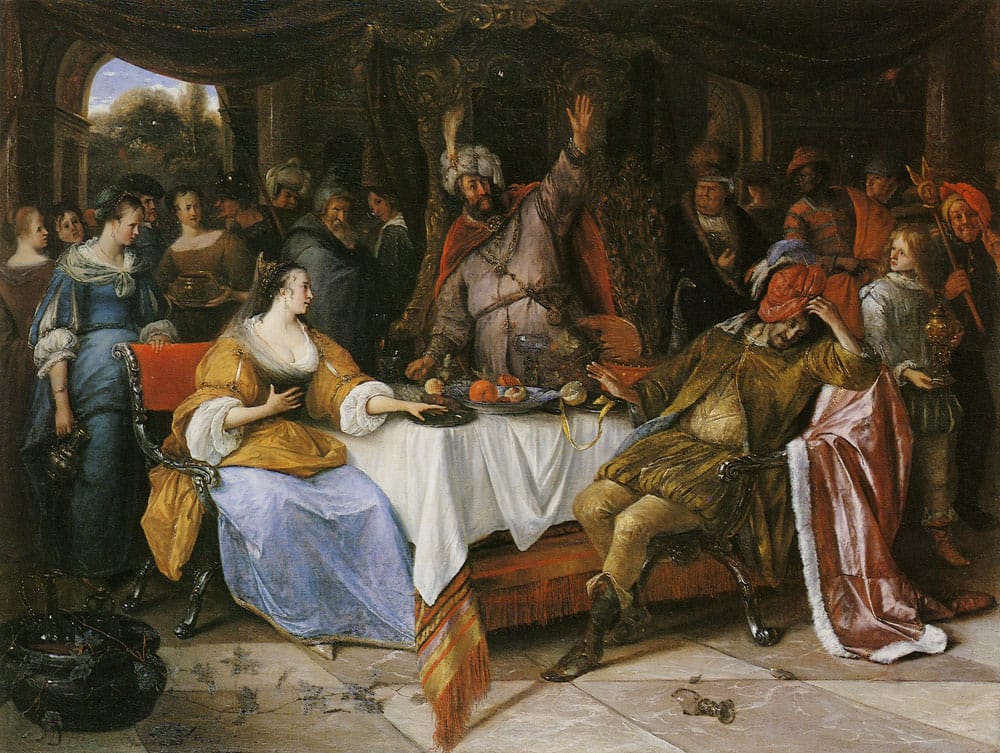
In the story, Esther approaches King Ahasuerus, the ruler of the Persians, and her husband, to denounce his advisor Haman—whose scheming against her uncle Mordecai had led the king to issue a decree to kill all the Jews in the empire. The exhibit featured centuries-old Bibles with intricate decorations and gilded scrolls as well as a good number of paintings. Many of the paintings included in the exhibit featured the scene where Esther presents herself to the king to plead her case and is able to touch his scepter—a sign that he will listen to her (and not have her executed). A few of the works depicted the moment the king turns on his advisor, to the horror of the surprised Haman.
One particular interpretation of the events struck me—Jan Steen’s depiction of the denouncement scene. Steen’s take has all the drama and physical dynamism you could want, with an angry Ahasuerus raising his hand against a shrinking Haman. The scene is filled with characters, each doing their part in forming the court of judgement. While they are all in their own way responding to the events transpiring, there is one who appears outside. On the far right, a jester stands. In a breach of the fourth wall, he stares at the viewer and points an accusatory finger. His ubiquitous gaze and extended digit seem to say this could have been you. It arrested me when I saw the painting, and I could feel a haunting following me into the next space in the gallery. I felt convicted.

Treasure Hoard
Sign up for Treasure Hoard to receive email digests in your inbox.