Negative Witness

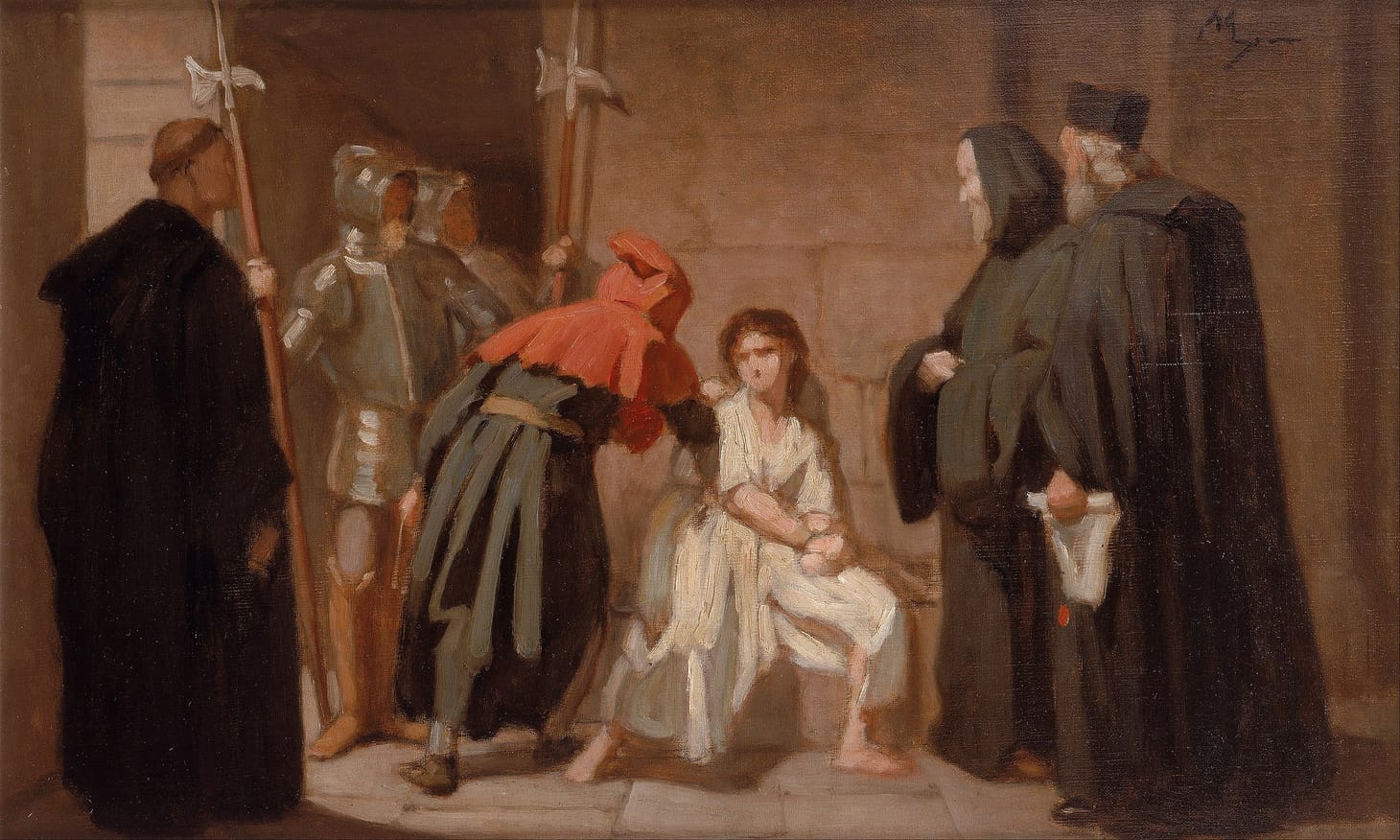
When watching the show, despite having prior knowledge about the tensions and violence between Protestants and Catholics in Europe, I found myself also wondering about the depth of Blackthorne’s disgust for his fellow Christians. I’ll admit, the Shogun TV series never quite satisfied my curiosity in the subject. It wasn’t until I read the novel that the series was based on that I began to understand the source of Blackthorne’s anger at the Catholics. His thoughts reveal that his personal family history primed him for his animus towards the Church of Rome.
What nonsense it all is! Catholic and Protestant and Calvinist and Lutherist and every other shitist. You should have been born Catholic. It was only fate that took your father to Holland where he met a woman, Anneke van Droste, who became his wife and he saw Spanish Catholics and Spanish priests and the Inquisition for the first time. I’m glad he had his eyes opened, Blackthorne thought. I’m glad mine are open.
Blackthorne doesn’t dwell too much on the subject, but the insight is enough. Later on in the book, a pilot named Rodrigues, himself a Catholic, reveals his own revulsion at the events that were a part of the Inquisition.
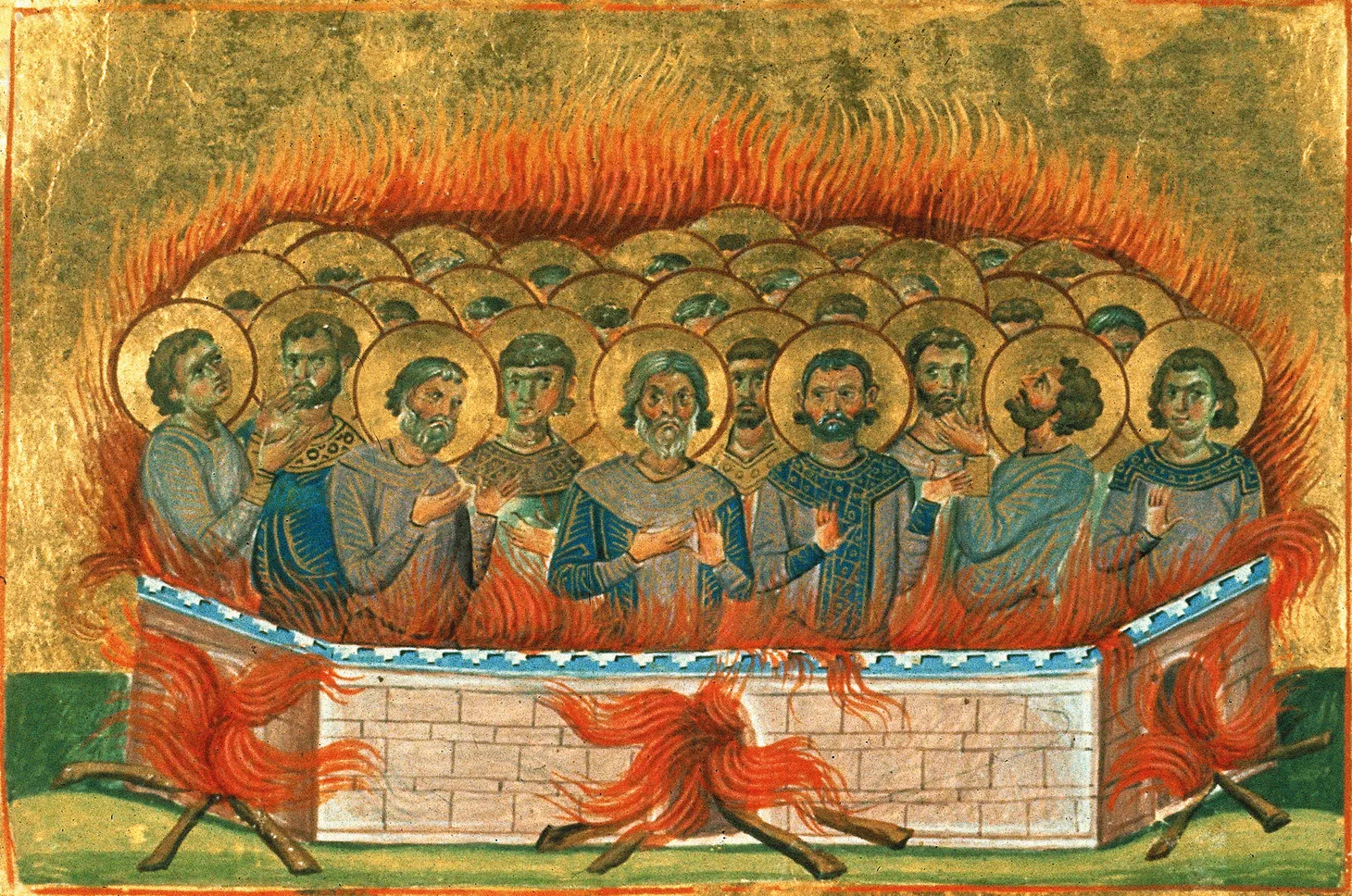
Rodrigues was equally enraged but he knew that he was as helpless as the Captain-General against the priest. Thou shalt not kill? By the blessed Lord Jesus, what about you? he wanted to shout. What about the auto da fé? What about the Inquisition? What about you priests who pronounce the sentence “guilty” or “witch” or “satanist” or “heretic”? Remember the two thousand witches burned in Portugal alone, the year I sailed for Asia? What about almost every village and town in Portugal and Spain, and the dominions visited and investigated by the Scourges of God, as the cowled Inquisitors proudly called themselves, the smell of burning flesh in their wake? Oh, Lord Jesus Christ, protect us!
Rodrigues clings to his faith (though one would hardly think of him as an exemplar of Christian virtue). Who would blame him if he didn’t though, after the crimes against humanity he witnessed?
The Mob Mentality
Recently, I also read the novel Laurus by the Russian author Eugene Vodolazkin and was struck by the similarities of one particular scene to those found in the Candide by Voltaire. The protagonist of Laurus, Arseny, and his companions find themselves in the Venetian city of Zara. The natives there mistake the foreigners for Turkish infiltrators and as a collective, make designs to hang them. The Catholic citizens of Zara, upon seeing the Orthodox Arseny make the sign of the cross in a way that is opposite of what they are used to, believe they have found their proof that Arseny, his Italian friend Ambrogio and their crew are indeed spies for the Turks.
For a while, Ambrogio attempted to explain that Catholics and Orthodox cross themselves differently and demanded they be taken to the Venetian pretor, but nobody would listen to him any longer. The residents of Zara were discussing how they should handle the captured men. After a brief but heated argument, they came to the conclusion that the infiltrators should be hung. Further, the residents of Zara were not inclined to postpone the matter to a later date, since they were well aware that time is the arch-enemy of decisiveness.
The ridiculousness of the mob mentality seemed to be almost lifted from Voltaire’s satirical account of the ravenously violent crowds in Europe. That is not to say that it had no historical basis from which to draw, but the sheer comical absurdity of the situation that Arseny and the others find themselves in seems to echo Voltaire. Of course, Voltaire’s commentary took the Inquisition as major inspiration, and the hero’s protagonist, along with his erstwhile tutor, Pangloss, get caught up in it.
The next day, Pangloss discusses his optimistic philosophy with a member of the Portuguese Inquisition, and he and Candide are arrested for heresy, set to be tortured and killed in an “auto-da-fé” set up to appease God and prevent another disaster. Candide is flogged and sees Pangloss hanged, but another earthquake intervenes and he escapes.
Candide is dripping with cynicism about the penchant for the Christian masses to completely forget the words of Christ in their zeal to protect the church.
We still see this today. Whether it is Orthodox Christians willing to defend the bombing of churches in Ukraine because they are no longer in communion with the Moscow Partriarchate or Evangelical churches willing to support even the most immoral and unfit politicians beause they believe those politicians are guarding the faithful, these attitudes still exist.

Treasure Hoard
Sign up for Treasure Hoard to receive email digests in your inbox.