
Treasure Hoard - December 2025
Predictions for the AI bubble, the katechon, the power of music in discernment and healing, fediverse trends, Wendell Berry and more.

And now for the links...
Ed Zitron from Where’s Your Ed At? makes predictions about how and why the AI bubble will burst in 2026. Zitron cites multiple stories (including his own) about the more challenging aspects of getting the financials to make sense when looking at the AI deals being made by big companies and comes up with some common threads.
- OpenAI doesn’t have cash
- The Money For Data Centers Is Running Out
- AI Is Wearing Out Its Welcome, and the AI Bubble Narrative Is Impossible To Ignore
While the whole post is for subscribers, even the free portion is worth a read to understand just how labyrinthine the deals creating the AI bubble are. A few months ago, I diversified my investments to (hopefully) avoid a large impact if the bubble should burst.
Richard Beck, whose Hunting Magic Eeels I am currently reading, introduced me to a new word recently: Katechon.
The katechon (from Greek: τὸ κατέχον, “that which withholds”, or ὁ κατέχων, “the one who withholds”), also known as the restrainer, is a biblical term referring to something that must be removed before the arrival of the “man of sin.” Mentioned in the New Testament, the katechon’s uncertain identity has been debated amongst Christian scholars.
Beck dedicated a four-part series of blog posts on Experimental Theology to the concept. In the fourth post from the series, Beck explains the problems with some modern thinkers (such as Peter Thiel, who apparently now goes around lecturing about the Antichrist) trying to identify a katechon.
And here, once again, we observe just how slippery all this is, how the katechon doesn’t hold back the Antichrist, as described in 2 Thessalonians, but becomes the Antichrist. The crux of Thiel’s theory is how the Antichrist gains power by promising to be the katechon. In biblical language, Satan is being used to cast out Satan. Satan prowls the earth, causing a rise in mimetic violence. Then we turn toward Satan to restrain that violence.
This is what I’m worried about. From an eschatology standpoint, I’m not thinking about a particular person being the Antichrist to set in motion a chain of events so much as a series of figures that are given power by Christians to behave in un-Christian ways, ostensibly to protect them.
I’ve written about this in the past, and the urges are not as fierce, but I have to admit I still judge people at least to some extent on their musical taste. Brian Pell writes for Mere Orthodoxy about our tastes reflecting a sense of our morality.
Rightly concerned with the impact of algorithms on the human experience, a cultural commentator for The New Yorker, Kyle Chayka, articulates the first component succinctly: “Taste is a word for how we measure culture and our relationship to it.” As he sees it, taste is an attunement mechanism for what is happening around us, notably among human endeavors. It is to know what is or will or should have cultural cache based on what one experiences and feels in response to some created thing, whether that be food or music or whatever the mechanism is attuned to. And, it’s our intuition toward “should” that clarifies Chayka’s assessment, because our taste unavoidably affects our relationships with people. “Taste,” he argues, “borders on morality, representing an innate sense of what is good in the world.” We don’t merely feel the music (or food or whatever) we enjoy is good; we often think others ought to feel the same way.
I’m not ready to go back to my high school days of writing people off because I feel affronted by their musical tastes, but at least have an reasonable explanation (beyond being a snob) of why we do that in the first place.
Speaking of music, here is something that has stuck in my head the last week+ of illness. Tobias Carroll writes for InsideHook about the ways music can boost our immune systems.
“[I]f you can reduce psychological and physical stress, you’re enabling your body’s immune system to do what it’s meant to do,” he explained. “Music can promote IgA levels. They can promote cytokine production, the production of natural killer cells, T cells, plus, they can increase serotonin, which boosts your mood, which in turn, can create this cascade of neurochemical activity.” It’s a welcome conclusion: the music you enjoy might be good for you as well.
During my recovery from the flu, I’ve been immersed in music, new and old. I’m hoping it is boosting my natural defenses, and for the sake of my wife, I hope binging Law & Order episodes has the same protective effect.
via Opus
Manton Reece, the developer of Micro.blog and all around swell guy, has predictions about the fediverse in 2026.
Mastodon is an incredible success story, yet it still feels unapproachable for new users and it has changed very little in the last several years. I think Mastodon recreates some problems from Twitter in likes and boosts, fixes a few things such as an open protocol and more hands-on curation with small communities, while also adding new wrinkles in the form of local timelines leading to filter bubbles and pile-ons.
Reece ultimately believes the fediverse has already plateaued in terms of active users (when Elon Musk was going buck wild on the government and the culture). While others, such as Ghost’s John O’Nolans see continued growth opportunities. It will be interesting to watch how this all plays out in 2026.
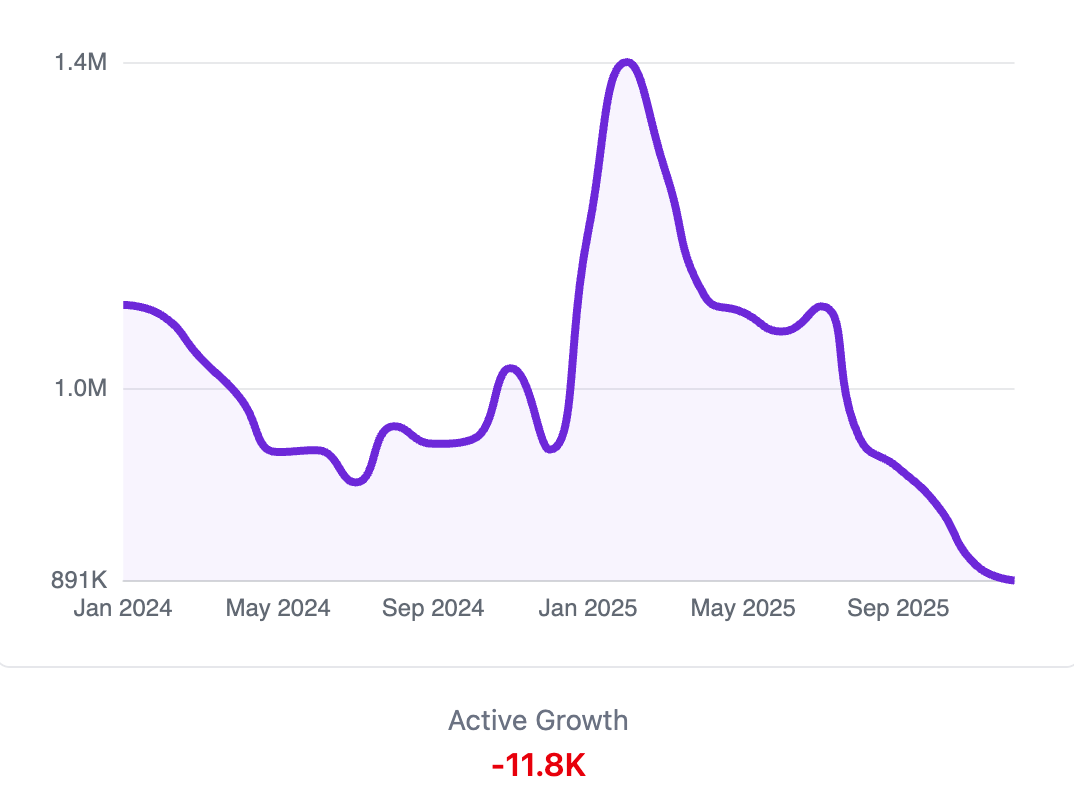
Two things are impediments to further growth. As I wrote in 2022, services like Mastodon have always defined themselves as reactions to malfeasance on the major platforms. As such, they tend to attract users when things going very publicly awry on the dominant social media sites. The other impediment, as Reece mentions, is how hard it is for everyday folks to understand how Mastodon works.
I still don’t know a lot about Wendell Berry, but he keeps coming up in online conversation and even in books I’m reading offline. In Hunting Magic Eels, Richard Beck references Berry when discussing the cultivation of hope as a practice.
Still, hope doesn’t just happen by people telling each other, “Have hope!” Hope isn’t a choice made at the sharp end of a command. Hope is a virtue, an emotional capacity we acquire through practice. Hope is a habit. In the words of poet Wendell Berry, we must “practice resurrection.”
As we head into the new year, practicing resurrection becomes particularly salient. My friend Jeremy Abel just started a blog dedicated to Berry. Abel is an ardent fan and promotor. I may have to get myself more acquainted in 2026.
In 2022, Nicolas Magand wrote a post about applying the Lotus philosphy of lighter cars to blog design. He even shared a template for the Blot blog platform which was designed with that philosophy.
He recently reflected on that post as he considered giving his site what he calls the “club racer” treatment to continue to slim things down.
For a while now, I’ve been generally happy with this site’s design, which feels very much in line with this Lotus philosophy. But there was always an itch that I couldn’t ignore: a Lotus Elise was great, but what I really wanted was a Lotus Elise CR.
This is why, in the past couple of… checks notes… weeks, I spent hours and hours giving the Club Racer treatment to this website, for very marginal changes.
The results Magand achieved are not dramatic, but they fascinate me for their exploration of craft and careful engineering.
Simone blogs at Minutes To Midnight about reviewing the ads from the early days of the iPod (back in the aughts) and comparing them to the ads after the iPod Touch debuted.
An article from the culture section of a newspaper (luckily they offer an RSS feed for each section) made me want to look for the iPod ads of the early 2000s. Of course, I found a supercut containing them all.
Some twenty-five minutes later, one thing stood out. All the ads for any subsequent model of iPod clearly showed a prominent feature: people who were hyper focused on the music. They were lost in it. Dancing, jumping, moving around with their white-corded earphones.
Until the iPod Touch came around.
Then, it swiftly changed to people playing video games, messaging, looking at websites, watching TV shows, using the iPod for anything except for losing themselves in one focused activity. The era of constant distractions. The uninspiring black slab. They can add any colour they like, it’ll remain a metal-plastic-glass dead slab built for distraction.
The focus of the iPod, which eventually just became subsumed into the do-everything iPhone (still weird that we call it a phone), shifted away from its roots in music. Music became more of a background feature, where you could passively listen to whatever algorithmic playlist was thrown at you without having to think too much while doing other things on your pocket computer. One of the reasons I love my Kindle is that it’s single-purpose device like the iPod once was.
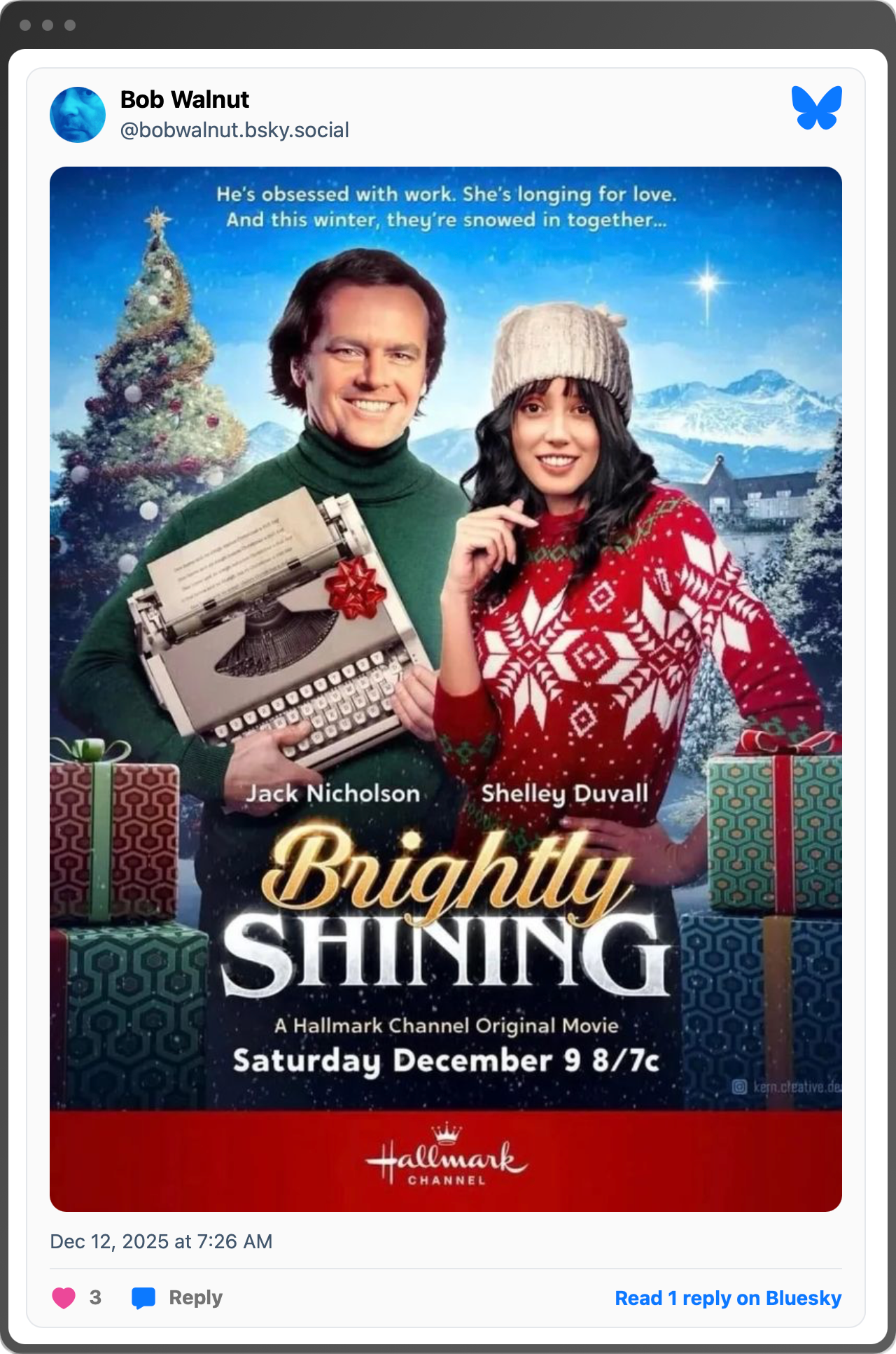
I trust you all were able to watch some of your favorite Christmas movies this season.

Treasure Hoard
Sign up for Treasure Hoard to receive email digests in your inbox.